
Prozac is one of the most commonly used selective serotonin reuptake inhibitors (SSRIs) used to treat anxiety and depression. If your doctor is putting you on Prozac (also known as fluoxetine), then you might be wondering what side effects to expect. All medication has side effects, however the goal is to keep them to a minimum and ensure they are not worse than the original condition.
What is Prozac?
Prozac is a selective serotonin reuptake inhibitor. This means that it works to increase the levels of serotonin in your brain. Serotonin is a hormone that helps regulate your mood, and increasing serotonin generally makes you feel better and helps you cultivate more positive emotions. This means that for many, but not all, people with anxiety or depression, Prozac helps control symptoms that might include, for depression, persistent sadness, thoughts of self harm, reduced energy and loss of interest in hobbies or, for anxiety, intense feelings of dread, difficulty breathing, or trouble concentrating.
These symptoms can be debilitating and for many people Prozac is a life saver, sometimes literally.
What Are the Side Effects of Prozac?
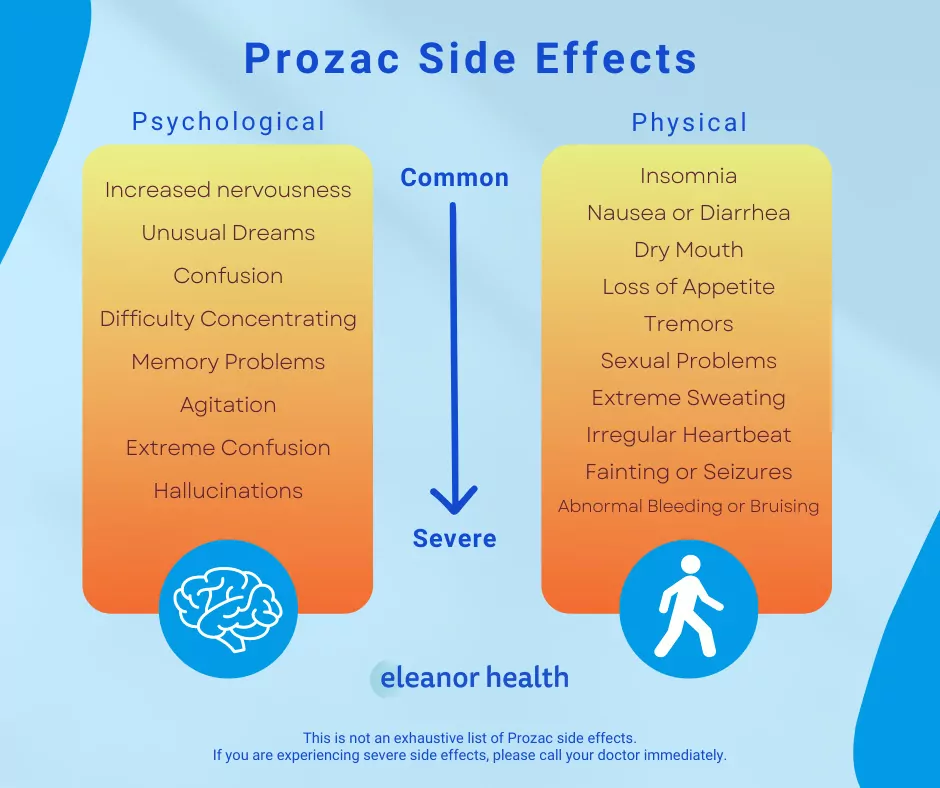
Common side effects of Prozac include:
- Increased nervousness or anxiety
- Insomnia
- Nausea
- Diarrhea
- Dry mouth
- Heartburn
- Frequent yawning
- Weakness
- Loss of appetite
- Weight loss
- Unusual dreams
- Stuffy nose
- Uncontrollable shaking/tremors of a part of the body
- Sexual problems
- Excessive sweating
- Headache
- Confusion
- Difficulty concentrating
- Memory problems
In most cases these symptoms are mild and pass quickly as your body adjusts to the medication. However, there are some serious side effects. If you experience these you should immediately call your doctor:
- Rash, hives or blisters
- Itching
- Pain in your joints
- Fever
- Swelling of the face, throat, tongue, lips, eyes, hands, feet, ankles, or lower legs
- Difficulty swallowing
- Difficulty breathing
- Agitation
- Extreme sweating or confusion
- Fast or irregular heartbeat
- Severe muscle stiffness or twitching
- Hallucinations
- Loss of coordination
- Nausea
- Shortness of breath
- Dizziness or fainting
- Seizures
- Abnormal bleeding or bruising
Be aware that in children and teenagers, going on Prozac or increasing the dose is associated with an increase in suicidal thoughts. This is temporary but is something you should watch for if your child is prescribed Prozac.
What Are the Effects of Stopping Prozac?
Suddenly going off Prozac can also have side effects. Prozac withdrawal is most often seen when people think they are better and stop taking the medication without consulting their doctor. Withdrawal symptoms include:
- Irritability
- Nausea and vomiting
- Dizziness
- Nightmares
- Headache
- A pricking or tingling sensation on the skin.
It is also possible that your symptoms of depression or anxiety will return in full force.
Does Prozac Make You Gain Weight?
No. In fact, Prozac is associated with weight loss during acute treatment. On a longer term time scale, some people treated with Prozac show modest weight gain. However, this is generally people who’s weight was already too low because of their mental health issues, and thus this is likely associated with recovery and actually a good thing.
How Long Do Prozac Side Effects Last?
For most people, the side effects of Prozac go away as their body adjusts to the drug. Typically they last for a few weeks. If they last for longer, you should consult your doctor, as this may be a sign Prozac is not the right medication.
Sexual dysfunction associated with Prozac can last longer and may last after you stop taking the medication.
Do Prozac Side Effects Differ in Men and Women?
There appears to be no clinical difference in the effects of Prozac between men and women. However, if you experience sexual issues, these do differ slightly by sex. Men experience difficulty getting and keeping an erection or delayed or absent ejaculation, while women experience delay or difficulty in orgasm.
However, women do have another concern. Prozac can increase the risk of premature birth should you become pregnant, and comes with a very small risk (less than 1%) of the child developing persistent pulmonary hypertension, which can be fatal. In many cases the danger of going off the medication is worse, but if you are on Prozac and your doctor has said you can go off it in the future, it is wise to use contraceptives until you have stopped taking the drug. You also should not breast feed if taking Prozac, as it can pass into your milk.
Can you mix Prozac and other medications?
You should not drink alcohol while taking Prozac. Mixing alcohol and Prozac can make the drug less effective and have a sedative effect that can make you extremely drowsy. You should also avoid illegal drugs. Do not take St. John’s wort for your depression if also taking Prozac. St. John’s wort reacts with a number of medications and should always be used with care.
Prozac should not be combined with:
- Monoamine oxidase inhibitors, another drug for depression, such as Nardil, Parnate, Marplan, Azilect or Emsam. If you are switching to Prozac you should wait 6 weeks after stopping the MAOI before taking it.
- Other antidepressants, triptans (used for migraine), amphetamines, some pain medications and linezolid, an antibiotic, can also elevate serotonin levels. This results in a slightly increased risk of serotonin syndrome, which can be life threatening and causes symptoms including hypertension, tachycardia, tremor, and potentially fever. If you need antibiotics from a provider other than your regular doctor, such as an emergency room, make sure they know you are on Prozac.
Fluoxetine can also increase or decrease the effect of certain other medication. This may mean you need to avoid the medication or take a smaller or larger dose.
It can increase the effect of:
- Some anticonvulsants.
- Some antipsychotics.
- Benzodiazepines, such as Xanax and Valium.
- Atomoxetine
- Warfarin
- Metoclopramide
- Tricyclic antidepressants
- Beta blockers
- Ibuprofen
It can decrease the effect of
- Tamoxifen
- Codeine
This does not necessarily mean you can’t take these medications with Prozac, but your doctor may want to adjust your dosage. Make sure to tell your doctor about all medications you use, including over-the-counter medications and herbal remedies, so that they can check for interactions with Prozac.
Prozac can be an extremely useful drug to treat mental illness. However, it can have side effects. Thankfully, for most people, these side effects are mild and transient. If you are suffering from depression and/or anxiety and need help, contact Eleanor Health today. We can help you get your life back. Our clinics our currently located in Louisiana, Massachusetts, North Carolina, New Jersey, Ohio, Texas, and Washington.