When you’re exploring treatment for substance use or mental health concerns, one of the first questions is often: what kind of care is right for me? It can feel overwhelming – and sometimes even discouraging – to sort through the different options, especially when you’re already carrying so much.
The good news is, there’s no single “right” path to recovery. Both inpatient (residential) and outpatient programs are proven ways to get support, and each has unique benefits. The best choice depends on your personal needs, your daily responsibilities, and your long-term goals.
Understanding the differences can help you feel confident about the next step – whether you need the safety and structure of inpatient care or the flexibility and whole-person approach of outpatient care. For many people, outpatient treatment provides the right balance: effective medical and emotional support, while still allowing you to stay connected to family, work, and community.
At Eleanor Health, we believe recovery should fit into your life, not pull you away from it. That starts with finding the level of care that meets you where you are, and grows with you over time.
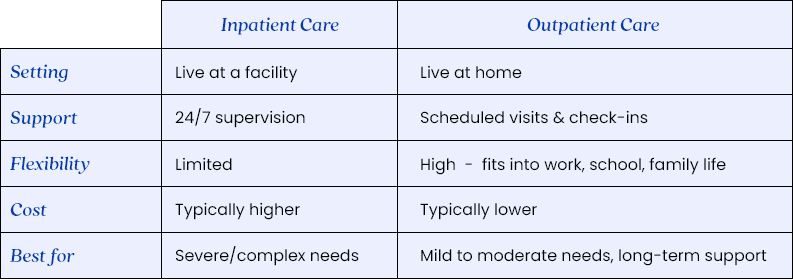
Inpatient, or residential, programs provide 24/7 care in a structured setting.

Outpatient programs provide treatment and support while you continue living at home.
How to Decide What’s Right for You

There’s no one-size-fits-all path to recovery. Ask yourself:
For many people, outpatient care provides the right balance – effective treatment, community support, and flexibility to keep moving forward in daily life.
At Eleanor Health, we specialize in outpatient, whole-person care. That means your care plan is built around you, combining medical treatment, therapy, and peer support with the flexibility of virtual and in-person visits. We support your mental, physical, and social health – not just substance use – and our compassionate team walks with you every step of the way.
And the results speak for themselves. Members who engage with Eleanor Health stay connected to care for an average of 22 months – more than twice the national average. That consistency is what makes recovery last.
Within the first 90 days, 91% of members experience measurable improvements in depression, anxiety, cravings, or social health. It’s proof that when treatment addresses the whole person, healing happens faster and more fully.
Most importantly, recovery becomes real. In fact, 85% of members achieve at least one major milestone within their first six months, showing that they are successfully taking back control of their lives.
We’re here to help
We know reaching out can be hard. Call today to speak with one of our recovery specialists. We will listen, learn, and offer support – without judgment. We welcome every person in need of support. Call us today at (877) 759-5017 to learn more about our addiction treatment services. We believe in you and your ability to overcome addiction.