
When someone is ready to seek help for substance use disorder, waiting weeks for an appointment can feel impossible. Timely access to care can make a meaningful difference. That’s why access to immediate care matters so much in addiction treatment.
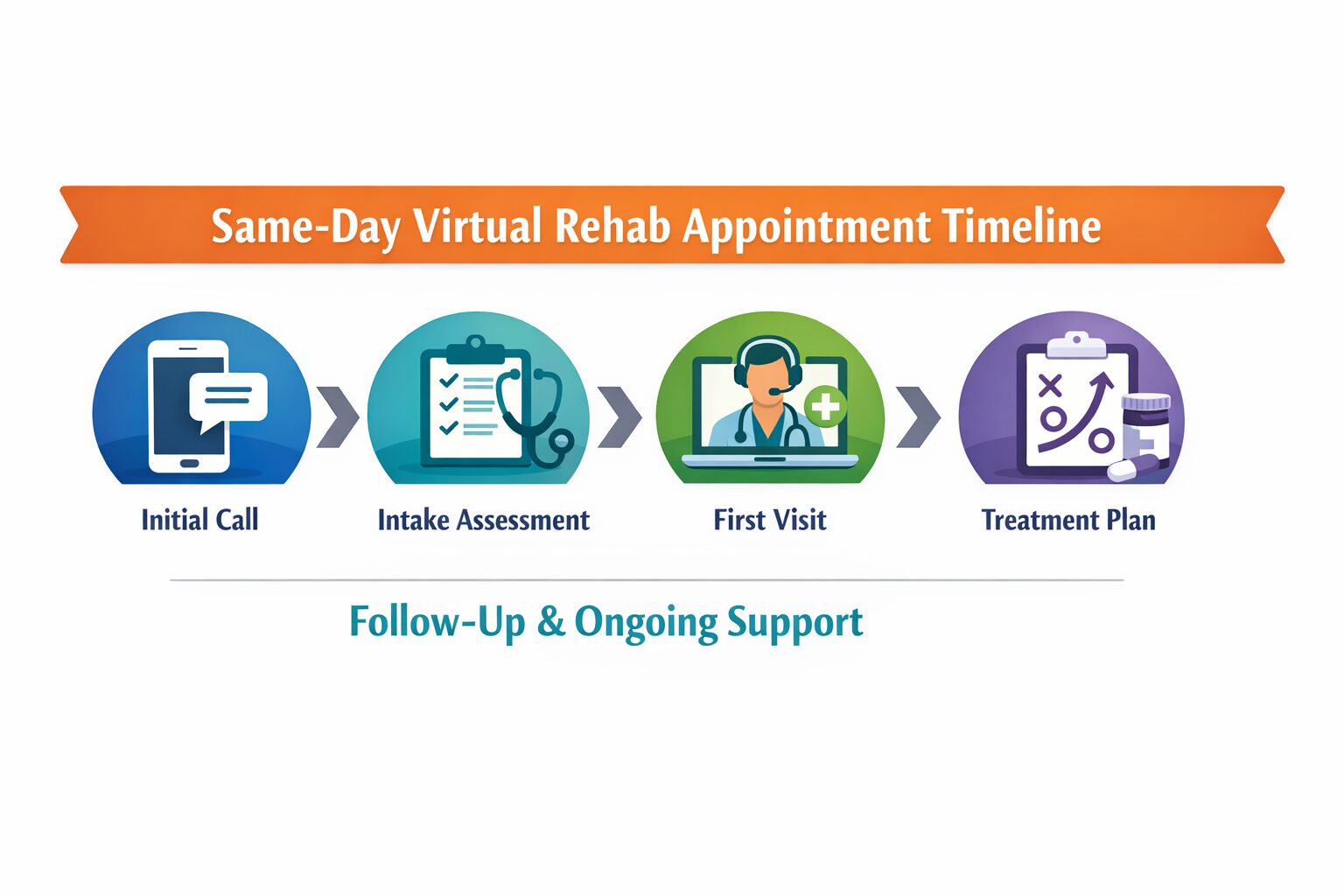
Same-day and next-day virtual outpatient appointments have made it easier for many people to start care more quickly. Instead of joining a waitlist or scheduling weeks out, many online outpatient programs now offer appointments within hours or days of that first phone call. Here’s how the process works and what to expect when seeking immediate virtual care.
Why Immediate Access Matters in Addiction Treatment
The window of readiness to seek help can be brief. When people are motivated to start treatment, delays create opportunities for that motivation to wane. Days or weeks on a waiting list can influence whether someone begins treatment when they feel ready.
Between 2019 and 2020, the percentage of substance use treatment facilities offering telehealth services more than doubled, jumping from 27.5% to 58.6%. This rapid expansion was about removing barriers and getting people into care when they’re ready.
Same-day virtual appointments may help reduce common barriers. There’s no need to arrange transportation, take time off work, find childcare, or travel to a facility. People can connect with a medical provider from their living room, often on the same day they decide to get help.
The Initial Phone Call: Starting the Process
The journey typically begins with a phone call to the treatment program. This isn’t a formal appointment, but rather a brief conversation to gather basic information and determine if the program is a good fit.
During this initial call, the intake team will ask about:
- Substance use patterns and frequency
- Any immediate health or safety concerns
- Current insurance coverage
- Any barriers to receiving care
- What the person hopes to achieve through treatment
This conversation is judgment-free and confidential. The goal is to understand someone’s situation well enough to schedule the right type of appointment and ensure they can access the technology needed for virtual care. Most programs aim to return calls the same day.
At Eleanor Health, this initial screening helps the team verify insurance coverage, answer questions about treatment, and schedule that first appointment—in many cases within one to two days, and sometimes the same day depending on availability.
Scheduling the First Virtual Appointment
If the program seems like a good match, the next step is scheduling the first medical appointment. Same-day appointments may be available if someone calls early enough. Next-day appointments are common, and most programs can schedule within two to three days at most.
The first appointment is typically with a medical provider who specializes in addiction medicine. This visit usually lasts 30 to 60 minutes and serves as both an assessment and the beginning of treatment.
Before the appointment, people receive:
- A link to join the virtual visit (sent via email or text)
- Instructions on how to access the telehealth platform
- A pre-appointment device check to test audio and video
- Confirmation of the appointment time
Depending on insurance coverage, this first appointment may be at no cost. Some insurance plans cover telehealth visits similarly to in-person care, though coverage varies.
Preparing for a Same-Day Virtual Appointment
Unlike in-person visits that require driving to a clinic, virtual appointments happen from home. A bit of preparation helps ensure the appointment goes smoothly. Find a private space where your conversation won’t be overheard, and ensure you have a stable internet connection. Virtual appointments can work on smartphones, tablets, laptops, or desktop computers. Most programs require a device with a camera and microphone, a stable internet connection, and a web browser. Most programs don’t require downloading apps.
What to Have Ready
Having certain information on hand makes the first appointment more efficient:
- Insurance card and photo ID
- List of current medications and dosages
- Names of other healthcare providers
- Questions or concerns about treatment
What Happens During the First Virtual Appointment
The first appointment follows a structure similar to any initial medical visit, just conducted via video.
Introductions and Overview
The medical provider introduces themselves, explains their background, and gives an overview of how the appointment will proceed. They’ll explain confidentiality and answer any immediate questions.
Comprehensive Assessment
The provider will ask detailed questions to understand:
- Substance use history: what substances, how much, how often, and for how long
- Previous attempts at quitting or cutting back
- Withdrawal symptoms experienced in the past
- Mental health history, including depression, anxiety, or trauma
- Physical health conditions and current medications
- Living situation and support system
- Goals for treatment
This assessment isn’t about judgment. It’s about gathering the information needed to create a safe, effective treatment plan. Providing accurate information helps providers recommend the right medications and level of support.
Treatment Planning
Based on the assessment, the provider discusses treatment options. This might include medication-assisted treatment, frequency of follow-up appointments, referrals to counseling, peer support services, and any additional resources needed.
The provider explains how each medication works, potential side effects, and what to expect. People have a say in their treatment plan. This is a collaborative process.
Prescriptions and Next Steps
If medication is appropriate, the provider can prescribe it during this first appointment. Current federal guidance allows certain medications, such as buprenorphine, to be prescribed via telehealth under specific clinical and regulatory conditions. Prescriptions are typically sent directly to a local pharmacy for pickup the same day or next day.
Before ending the appointment, the provider schedules follow-up care, which might include a check-in within a few days, regular medication management visits, referrals to counselors, and connection with peer support specialists.
Technical Considerations for Virtual Appointments
Virtual platforms are designed to be simple and accessible.
About 15 minutes before the scheduled time, people receive a reminder message with the link to join. Clicking that link opens the virtual waiting room. The provider joins when they’re ready to begin.
If technical issues arise during the appointment, the provider can switch to a phone call to complete the visit. After the appointment, most programs send a summary of what was discussed, any prescriptions written, and next steps.
What Makes Same-Day Appointments Effective
Research suggests virtual addiction treatment can support outcomes comparable to in-person care for many individuals. The key to effectiveness isn’t whether the appointment happens in person or via video; it’s whether the person receives evidence-based treatment that addresses their specific needs.
The ability to start treatment may help improve engagement for some individuals. When someone can meet with a provider the same day they call, they’re more likely to engage with treatment and less likely to encounter obstacles that prevent them from starting care.
Common Questions About Same-Day Virtual Appointments
Can medications really be prescribed virtually?
In many cases, federal regulations allow providers to prescribe medications for substance use disorder via telemedicine. For opioid use disorder specifically, providers can prescribe buprenorphine through telehealth appointments for up to six months before requiring an in-person visit.
What if withdrawal symptoms are severe?
During the initial assessment, providers evaluate whether someone can safely start outpatient treatment or if they need a higher level of care first. Severe withdrawal symptoms that require medical monitoring might need inpatient detox before transitioning to virtual outpatient care.
Is the appointment really confidential?
Yes. Telehealth platforms used by reputable programs are HIPAA-compliant and encrypted to protect privacy. The same confidentiality rules that apply to in-person visits apply to virtual appointments.
Getting Started Today
At Eleanor Health, same-day and next-day virtual appointments make it possible to start treatment when someone is ready. Call (877) 759-5017 to verify insurance, discuss treatment options, and schedule that first appointment, often within 24 to 48 hours.
The first appointment with a medical provider creates a personalized treatment plan that might include medications, counseling, and peer support. Starting treatment may begin with a simple phone call when someone feels ready.
Citations
“Telemedicine Services in Substance Use and Mental Health Treatment Facilities | CBHSQ Data.” SAMHSA, 2021, www.samhsa.gov/data/report/telemedicine-services.
Quick Summary
Same-day virtual rehab appointments make it possible to start addiction treatment quickly, often within hours or a day of reaching out. Instead of waiting weeks, people can connect with an addiction-trained medical provider through a secure video visit from home. The process usually begins with a brief intake call, followed by a first appointment lasting 30 to 60 minutes. During that visit, the provider completes a full assessment, discusses treatment options, and may prescribe medications like buprenorphine if appropriate. Follow-up care often includes counseling, peer support, and regular medication check-ins. Virtual appointments reduce barriers like transportation, scheduling conflicts, and childcare needs. Starting treatment quickly helps people act while motivation is high and improves engagement in recovery.