
Dry January tends to start with a simple idea: I’ll take a break from drinking.
No big declarations. No long-term promises. Just… let’s see what happens.
And for many people, what happened was surprising.
After the busiest, loudest, most social time of the year – holidays, parties, late nights – January offered a pause. And in that pause, people learned things. About their routines. About their stress. About how alcohol shows up in their lives in ways they hadn’t fully noticed before.
The biggest takeaway? If Dry January felt harder than expected, that wasn’t a failure. It was information.

When Taking a Break Raises Questions
A common reaction we heard was: Why does this feel so hard?
For a lot of people, alcohol quietly becomes part of how we manage stress, transition out of the workday, connect socially, or signal that it’s time to relax. When you remove it – even temporarily – you start to see where it was doing work behind the scenes.
That question matters.
If skipping alcohol for a few weeks felt overwhelming, it doesn’t mean something is “wrong.” It may simply mean alcohol had become a coping tool. That’s not something to judge. It’s something to get curious about.
Cravings Aren’t a Moral Failing
One of the most important lessons from Dry January is this: cravings are normal.
Think about it this way. If you eat breakfast every day at 8 a.m. and suddenly stop, your body doesn’t calmly adjust. You get hungry. Not because you lack willpower, but because your brain expected something.
Alcohol works the same way.
If you usually have a drink after work or before dinner, your body and brain are used to that rhythm. When it doesn’t happen, your system notices. That “pull” isn’t weakness. It’s habit and physiology doing what they do.
Cravings are a signal, not a verdict.
Timing Matters More Than Willpower
Try HALT (Hungry, Angry, Lonely, Tired)
Many people noticed cravings hit at very specific times – often late afternoon or early evening, when stress is high and energy is low.
That’s where a simple framework can help: HALT
- Hungry
- Angry
- Lonely
- Tired
These states make cravings louder. Planning for them makes a difference.
Eating regularly. Not letting yourself get overly depleted. Scheduling connection. Protecting sleep. And having something – anything – to look forward to during that familiar “drink o’clock” window.
Dry January taught a lot of people that behavior change isn’t about grit. It’s about timing and support.
Shame Makes Everything Harder
Another clear lesson: beating yourself up doesn’t help.
Shame increases loneliness. Self-criticism raises stress. Both make cravings stronger, not weaker.
Instead of What’s wrong with me? a more useful question is: What is this teaching me?
Cravings are data. Slip-ups are data. They can help you understand the role alcohol plays in your life – and whether you might benefit from more support.
What Helped People Replace the Ritual
For many, simply having something in their hand mattered.
The good news is the non-alcoholic world has come a long way. Non-alcoholic beers and sparkling wines. Zero-proof cocktails. Alcohol-free spirits. Adaptogen-based drinks.
You can still have a Bloody Mary moment. A fancy glass. A sparkly drink. Just without the aftereffects.
Others found that movement, time outdoors, hobbies, or evening rituals replaced alcohol in ways that felt just as rewarding.
What Changed Physically (Over Time)
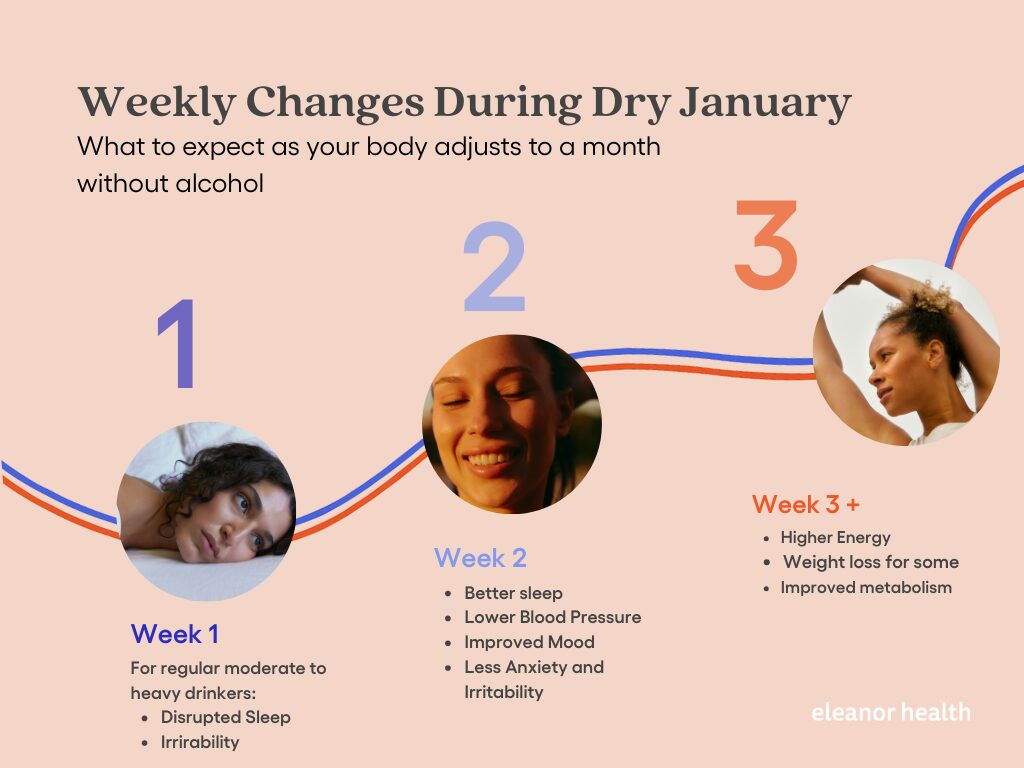
A lot of people were curious about what happens to the body when alcohol is removed.
ring Dry January.
Week 1
The first week was often the hardest, especially for regular moderate or heavy drinkers. Sleep disruption, irritability, and restlessness can show up as the body recalibrates.
Alcohol can feel relaxing at first, but it disrupts REM sleep and leads to more nighttime awakenings. That’s why many people noticed sleep improving after a few weeks.
Week 2
By week two, common changes included:
- Better sleep quality
- Lower blood pressure and resting heart rate
- Improved mood and patience
- Less anxiety and irritability
Week 3 and Beyond
By week three, many people described feeling clearer, steadier, and more energized.
Weight changes showed up for some as well. A single alcoholic drink can contain 100–150 calories. Removing that daily intake often leads to noticeable shifts in energy and metabolism.
A Safety Note: Dry January Isn’t One-Size-Fits-All
If you drink heavily and regularly, stopping alcohol suddenly can be dangerous. Alcohol withdrawal can be serious and even life-threatening.
Symptoms like shaking, sweating, severe anxiety, or sensations like bugs crawling on your skin are a medical emergency. Go to the ER.
If you’re drinking more than four drinks per day on a regular basis, talk with a healthcare provider before stopping. Reducing gradually may be safer – and still effective.
Rethinking Alcohol Use Disorder
One of the most important reflections from Dry January is how many people realized they didn’t fit the stereotypes they’d been taught.
Alcohol use disorder doesn’t only affect people who have “hit rock bottom.” It exists on a spectrum, from mild to severe. Many people with alcohol use disorder are working, parenting, and showing up every day.
What defines it isn’t appearance. It’s whether alcohol causes negative consequences and whether drinking continues despite them.
Nearly 29 million people in the U.S. meet criteria for alcohol use disorder. Most don’t look like the myth.
Dry January doesn’t have to lead to lifelong abstinence. It might lead to drinking less. Asking better questions. Getting more support.
All of those count.
Don’t Take the Lessons Alone
If Dry January taught us anything, it’s that change is easier with support.
That’s why we work out with friends, text someone when motivation dips, and share progress out loud. Whether it’s a buddy, a clinician, or a community, support matters.
Because learning something new about yourself is powerful. And you don’t have to figure out what to do with that information on your own.
Support is Available
For some people, Dry January feels empowering. For others, it feels surprisingly hard. Both experiences are common — and both are worth paying attention to. If this month revealed concerns about alcohol use, our Alcohol Use Disorder (AUD) resources can help you understand what comes next.
If Dry January gave you insight into your relationship with alcohol, you don’t have to decide what comes next alone. You can call us at (877) 759-5017 or reach out online to learn your options and get support that fits your life.